


You are researching AI solutions for your insurance operation. You have read the articles, maybe attended a webinar or two, and now you are sitting through vendor demos. Everything looks impressive. The interfaces are clean. The use cases sound familiar. The sales team is confident.
And then a quiet question forms in the back of your mind. "But how do I actually know if this AI solution is good?"
Vendors sell outcomes. What you need to evaluate is the AI itself. Is it truly capable of delivering on vendor promises? Will it hold up under real conditions?
Here are key areas that tell you whether the AI behind the solution you’re evaluating is genuinely good or just well packaged.

Accuracy Tells You If the AI Can Actually Do the Job
In insurance, even small errors can have big repercussions: Data incorrectly extracted from a loss run extraction can lead to a mispriced quote. A misread claims form field delays payment to a policyholder at their time of greatest need. Errors like these do not just create rework. They erode customer trust in your team and your brand.
The benchmark for high-quality AI in insurance document processing sits above 98% accuracy in production environments. That is not a demo number. That is the standard for live workloads across complex document types common to insurance operations.
Insurers deploying AI at that accuracy level have reported claims indexing at 99% straight-through processing rates and throughput increases of more than 60%, resulting in 150% ROI – often within the first six months.
Good AI holds up across both simple and complex tasks, and the vendor should be able to prove it with performance metrics from live production deployments.

Domain-Specific Knowledge Tells You If the AI Understands Your World
Accuracy alone is not enough if the AI does not understand what it is reading. Document types unique to insurance – such as loss runs, supplemental applications, FNOL forms, workers' comp filings, policy endorsements, and ACORD forms – each carries their own structure, terminology, and logic. A general-purpose AI can read text. It cannot reliably interpret or calculate derived values from an insurance document.
Good AI for insurance is pre-trained on insurance-specific content before it ever touches your workflows. It understands the difference between document types. It knows how to handle tables, checkboxes, and layered forms that trip up generic models. It applies insurance logic to everything it reads, not just pattern matching.
During a demo, request that the vendor go beyond processing clean examples. Ask them to process your documents with the data you care about. Ask how their AI handles a messy loss run or a supplemental form hand-written in script. Ask what happens when a document is formatted in an unusual way. The AI that was built for real-world insurance workflow challenges will handle these edge cases far better than one that was adapted from a general model. And that gap in performance is where insurers’ real operational risk lives.
Transparency Is the Foundation of Trustworthy Insurance AI Decisions
A capable but opaque solution cannot be trusted at scale or meet regulatory requirements. Your teams need to know what the AI decided, why it made that decision, and where it flagged uncertainty. Without that visibility, you are not using trustworthy AI. You are kicking the governance can down the road.
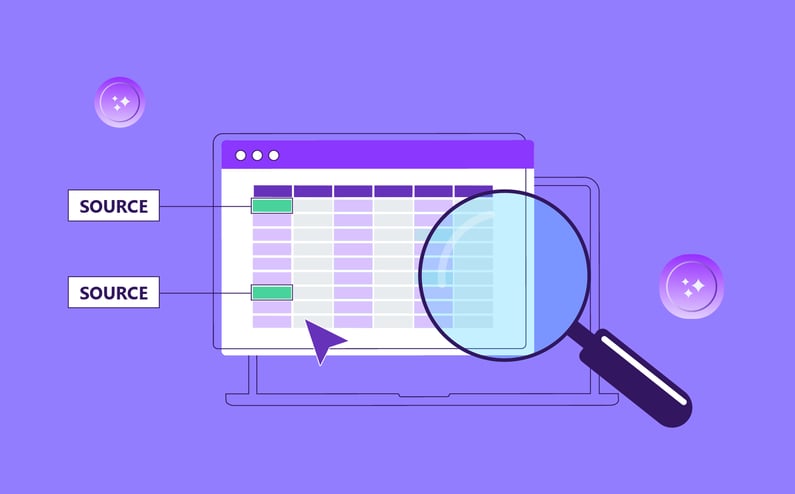
Insist on AI that shows its work. When it extracts a data point, you should be able to trace it to the source. When it makes a routing decision, every stakeholder should fully understand the reasoning behind it. When confidence drops below a specific threshold, it should flag the item for human review, rather than guessing and moving on.
Transparency makes AI auditable. Regulators and internal compliance teams will need to understand and explain how automated decisions are being made. AI lacking transparency, sometimes called “black box AI,” creates operational risk, as well as business risk. Visible, explainable AI is not just better to work with. It is easier to defend. It is easier for your employees to trust.

Confidence Scoring and Human-in-the-Loop Tell You If the AI Knows Its Limits
There is a meaningful difference between an AI that is right and an AI that knows when it might be wrong. Confidence scoring is how good AI communicates that difference, and what it does with that signal is just as important.
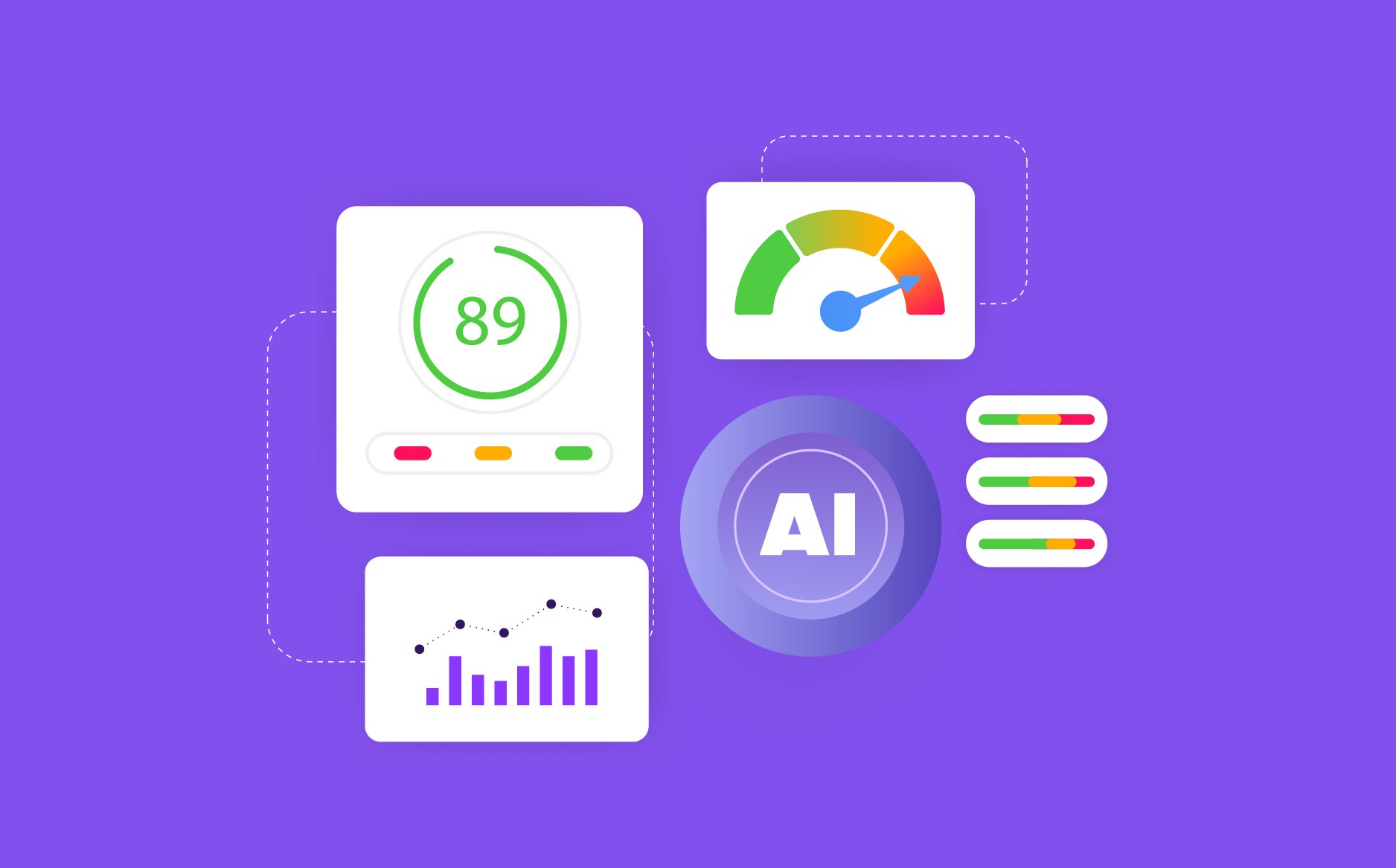
When an AI processes information, it should attach a confidence score to every decision it makes. High confidence scores mean that the AI read the data clearly and is certain of its output. A lower confidence score means it encountered an irregularity, an unusual format, a faded field, an ambiguous term, or other issue necessitating human review for confirmation.
Without confidence scoring, an AI treats every output the same, right or wrong giving your experts no way to catch errors before they move downstream until someone finds it the hard way.
And confidence scoring alone is only part of the equation. What an AI solution does after encountering a low-confidence result is what separates a good and risky AI. Good AI works with your teams, using human-in-the-loop approaches, automatically routing uncertain items to the right human for review, rather than passing them through unchecked. It escalates issues promptly and communicates clearly to prevent bottlenecks.
Also, every time a human expert intervenes to correct an output or overrides a decision, great AI learns from that interaction. The human review becomes a feedback loop that fine-tunes the model over time, which connects directly to continuous learning, improved accuracy, and higher straight-through processing rates.
Ask vendors how their AI solutions handle uncertainty from start to finish. Do they score confidence on every output, and automatically flag and route low-confidence items? Can you customize thresholds by document type or business rule?
A confident, specific answer to these questions is a strong signal of a well-built system.
Continuous Learning Drives Continuous Improvement in Insurance AI Systems
The next question is whether the AI gets better over time. From day one, an AI should already perform well. But good AI does not stay static. It learns from the data it processes, the corrections it receives, and the patterns it encounters in your specific environment. A great AI system becomes more accurate, more efficient, and better calibrated to the way your operation works over time.
Learn how an AI provider updates their model.
Insurance is no place for a “set-it-and-forget-it" approach to AI. Document formats shift, regulatory requirements evolve, and carrier-specific terminology varies across lines of business, causing static models to degrade fast. For these reasons, you need to evaluate AI vendors as closely as you would their solutions.
Trustworthy insurance AI solution vendors treat model management as a permanent discipline. They’re dedicated specialists who continuously monitor for drift, retrain on new data, and test for bias before their AI reaches production in a customer’s operations.
To know whether AI is “good” for your operations, learn about vendors’ processes: Do they include controlled rollouts with A/B testing, expert-annotated training data built by people with deep insurance domain expertise, and verification layers that validate outputs before they reach your systems? This curated approach is the foundation of enterprise-grade insurance AI.
Good AI Is Secure and Can Be Trusted with Your Data
All questions about AI quality inevitably return to the topic of data. Insurance data is highly sensitive. Policyholder information, claims records, financial details, and personal health data all flow through an AI-powered system. How that data is handled matters as much as what the AI does with it.
Here, again, insurance domain-specific knowledge matters. When evaluating insurance AI providers, learn where your data goes, how long it is retained, who can access it, and what certifications the vendor holds. A trustworthy vendor makes this information easy to find and easy to verify. Security documentation should not require a legal request to be accessed.
Regulators are increasingly focused on how carriers use automated systems that touch policyholder data. The AI solutions you adopt today need to be ones you can explain and defend confidently tomorrow.
The AI you bring into your operation should meet or exceed these same standards. As insurers accelerate their AI transformations, some vendors will try to win deals by delivering impressive demos run on curated data sets – and hope that carriers will accept these results as sufficient proof that their solutions offer the right fit.
This process seldom yields “good AI.” And once such a system enters production, claims start backing up, errors compound, and revenue leakage grows. By the time your team catches and corrects these flaws, the damage is already done. This may partly account for why a recent Boston Consulting Group study identified insurance as second among all industries in AI adoption – but second-to-last in successfully scaling AI in production.
Knowing what makes an AI solution “good” puts you on the fast track to accurate, reproducible, and scalable results.
Choosing to modernize your insurance workflows is a high-stakes decision. When a vendor cannot clearly demonstrate all of the above, it is a clear sign that their products neither meet the definition nor the standards of good AI.
