



A claims summary isn't a single document with a single purpose. It's what an adjuster produces when updating a policyholder on where their claim stands, when bringing a broker or agent into the conversation, and when transferring a file to another handler. Each of those moments calls for a summary, and each one looks different depending on who's receiving it.
A policyholder needs to know what happened and what comes next. A broker needs enough context to respond to their client. An incoming adjuster needs a full picture of activity, documentation, and outstanding items. The same claim, three different summaries.
That variation is what makes this work time-consuming. Adjusters aren't just writing a recap. They're pulling together police reports, medical records, activity logs, and adjuster notes, then deciding what matters most for this audience, at this stage of the claim. Multiply that across a caseload of 150 to 200 open files, and the time adds up fast.
AI-powered claims summarization addresses this directly. Instead of requiring adjusters to manually piece together each summary, an AI agent analyzes the full claim file and generates a clear, structured output in minutes, tailored to the audience and the moment.
What Changes When Summaries Are Done Right
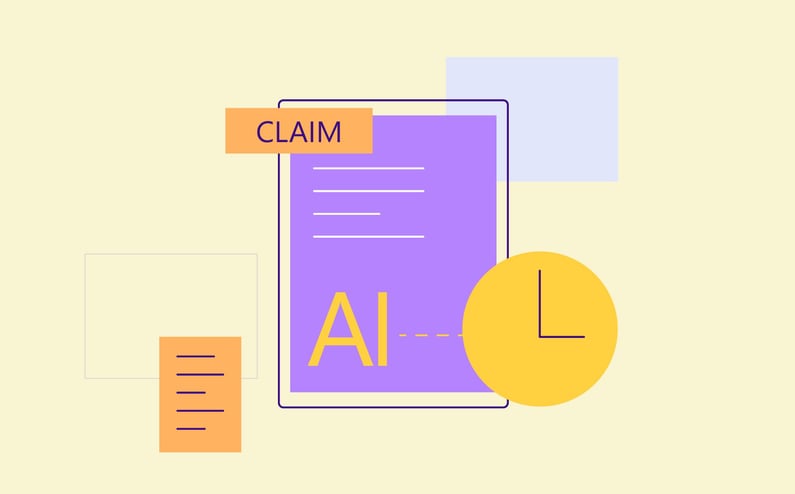
When summaries are created consistently and quickly, the impact extends beyond the individual adjuster.
Summaries are no longer a bottleneck that slows communication or delays action. They become a consistent, reliable source of truth for every interaction, whether it is a policyholder update, a broker conversation, or a file handoff. Adjusters begin with a clear, structured view of the claim. Work progresses with fewer interruptions, fewer missed details, and less rework.
That same consistency extends across the organization. Managers and audit teams can review files more efficiently with a clear understanding of activity and decisions. Underwriters gain faster insight into loss history when evaluating renewals. Brokers receive more complete and consistent information through the updates and communication provided by the claims team. Each stakeholder operates from the same underlying foundation, improving alignment across the lifecycle of the claim.
How AI Generates Claims Summaries at Scale
Once summaries are required across multiple audiences and moments, the challenge becomes clear. The information must be gathered, interpreted, and tailored each time.
An AI agent addresses this by analyzing the full claim file and generating structured summaries in minutes, tailored to the audience and the purpose, whether it is a status update, a handoff, or a broader view of the claim.
Here's what that looks like in practice.
-
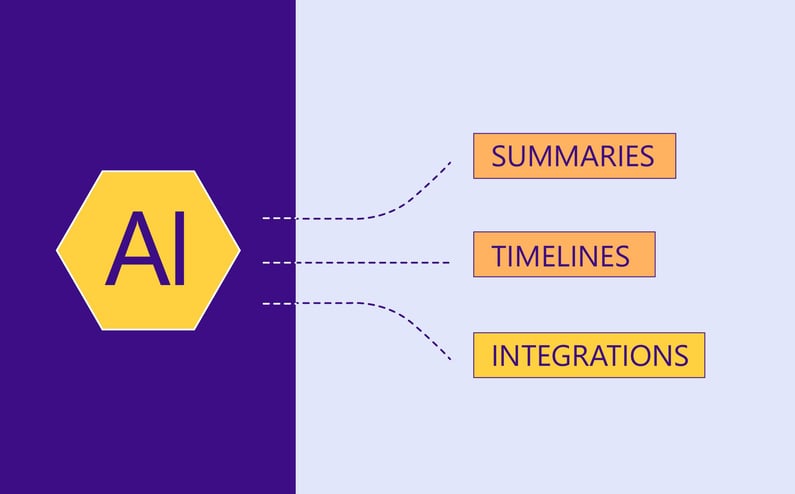
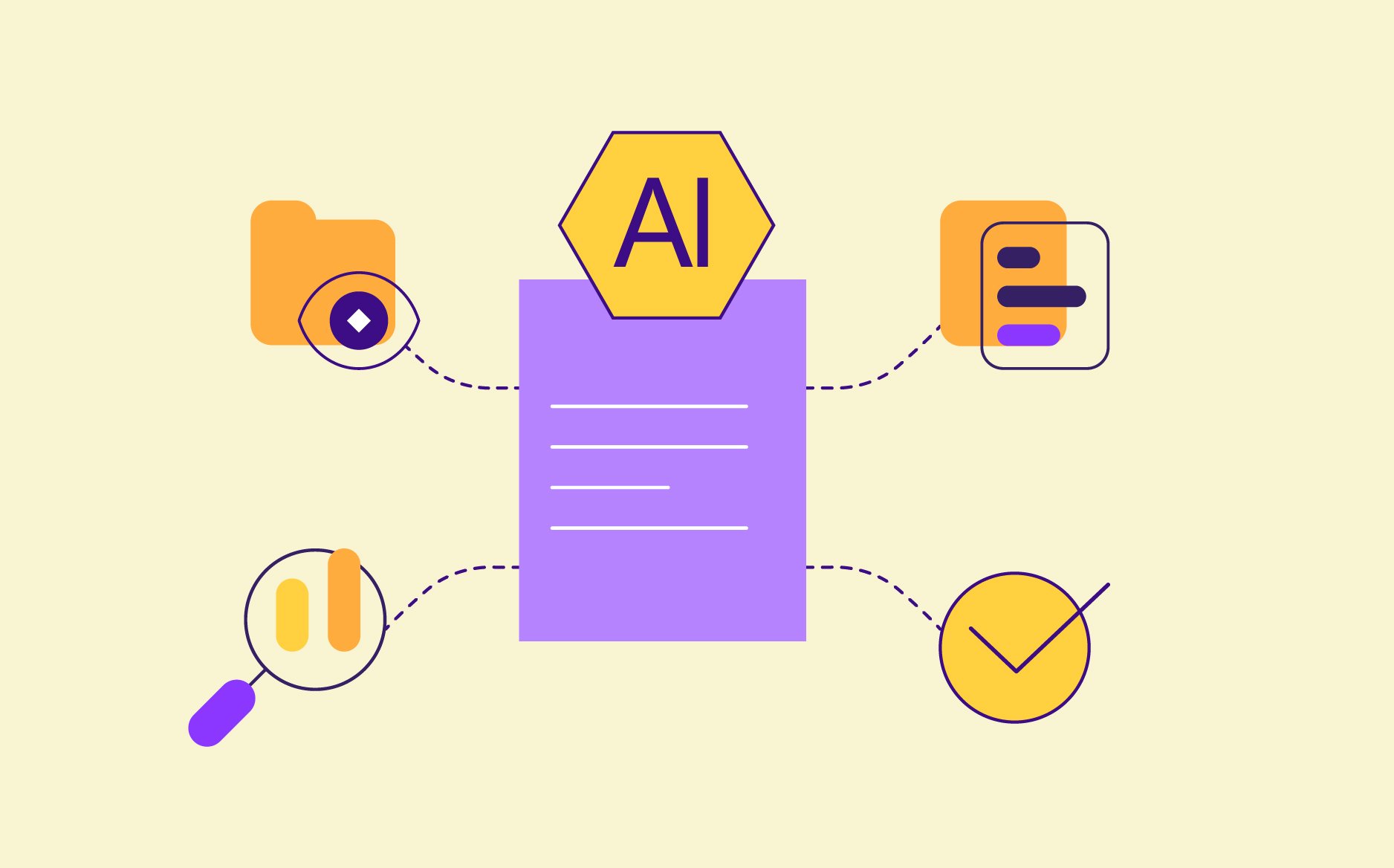
Role-based summaries. Not every person working on a claim needs the same information. A claims manager sees different details than a subrogation specialist or a medical reviewer. AI agents create summaries tailored to specific roles and document types, such as medical records, expert reports, and witness statements, to deliver on-demand access to insights and information most relevant to each claims professional’s role.
-
Claim file timelines. Rather than reconstructing a sequence of events from scattered notes, the AI generates timelines capturing all critical events and activities inside a claim to provide a structured view of events throughout the claim's lifecycle. Adjusters can immediately see when the loss occurred, when documents were submitted, and what actions were taken – all without digging through the file manually.
-
System integrations. The AI agent connects directly with the platforms claims teams already use. AI agents connect with email inboxes, document storage, and via APIs with systems of record like Guidewire, Duck Creek, and Origami Risk to automatically embed summaries within existing workflows.
Claims summarization is one capability within a broader AI-driven claims strategy. The right combination depends on where your team is losing the most time and where faster, more accurate decisions would have the greatest impact on outcomes.
Benefits of AI-Powered Claims Summarization
AI claims summarization doesn't replace adjusters. It changes how information is prepared, shared, and used across the claims process. That shift has measurable impact across communication, decision-making, and operational consistency:
-
Faster, more consistent communication. Summaries are created in minutes rather than hours, allowing adjusters to provide timely and consistent updates to policyholders, brokers, and internal teams. Each interaction starts from a clear understanding of the claim, reducing delays and improving the quality of communication.
-
Stronger handoffs and reduced rework. When a file is transferred or reviewed, the next person does not need to reconstruct what has already happened. Structured summaries provide a clear view of activity, documentation, and outstanding items, reducing missed details and eliminating the need to revisit the same information.
-
Improved decision readiness. With relevant information organized and validated upfront, adjusters can focus on evaluating coverage, managing settlements, and progressing the claim. Decisions are made with more complete and reliable context, improving both speed and quality of outcomes.
-
Greater visibility for oversight and downstream workflows. Managers and audit teams can review claims more efficiently with a clear view of activity and decisions. Underwriters benefit from faster access to structured loss history during renewal evaluation. Brokers receive more consistent information through claims updates, improving client communication.
- More consistent and defensible outcomes. By standardizing how information is gathered and presented, AI reduces variability across claims handling. This supports more consistent application of coverage, stronger documentation, and better alignment with regulatory expectations.
These gains are most visible in the everyday moments where summaries are required, from policyholder updates and file transfers to audits and renewal reviews. They also create additional capacity, giving teams more time to focus on judgment, decision-making, and relationship-building.
AI claims summarization does more than save time. It changes how information flows through the claims process.
Instead of reconstructing details for every interaction, teams begin with a clear, structured understanding of the claim, tailored to the audience and the moment, whether for a status update, a handoff, or a broader view of the claim. That shift improves how updates are delivered, how files are transferred, and how decisions are made across the organization.
The impact extends beyond the adjuster. Managers, audit teams, underwriters, and brokers all benefit from more consistent, reliable information, improving alignment across the full lifecycle of the claim.
As claim volumes increase and expectations continue to rise, the ability to act quickly without sacrificing accuracy becomes critical. AI-driven summarization embeds that capability directly into the workflow, ensuring that the right information is always prepared and ready to support the next decision.
