
AI exerted a tremendous impact in 2025 – and the technology’s influence on US labor markets will continue to grow in 2026, not by way of sudden displacement but through intensifying demand for new skills from technology-dependent businesses – including insurance.
Organizations are increasingly advancing AI programs from exploration to execution to integration across daily operations – and hiring patterns are also evolving from AI fluency being a useful complementary resume checkbox to a baseline necessity.
But inside this trend nests another, equally important one: Rather than a single national “explosion” of demand for AI skills, AI job growth is distributed regionally – and across organizations, rather than anchored to traditional tech fields.
Employers are seeking and competing for AI-literate talent, and where these workers apply their in-demand skills is becoming just as important as the skills themselves as AI regulations, particularly in insurance, become more fragmented.
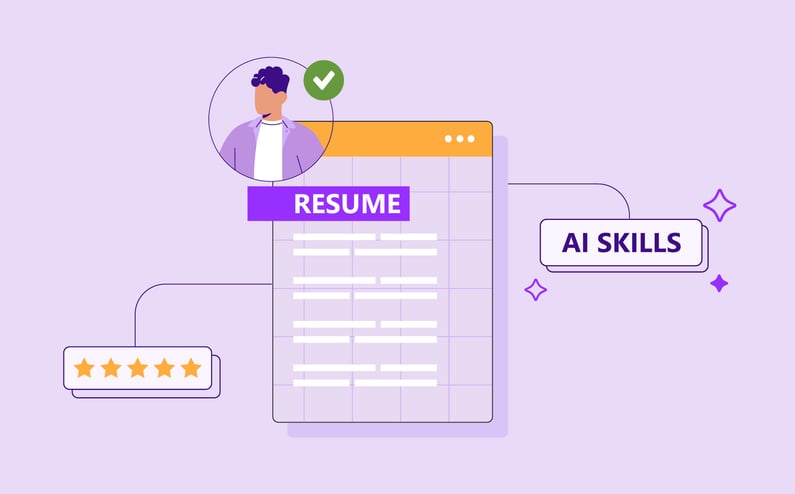
AI Skills Are Now a Baseline Expectation Across Workforces
AI isn’t limited to research teams or highly specialized experts. Across insurance organizations, AI is being embedded into underwriting, claims, finance, customer operations, and analytics. As a result, AI familiarity is becoming a baseline expectation for many professional roles.
Industry research consistently shows that AI-related skills are appearing in job postings for roles that extend far beyond traditional technology functions. Employers are not only hiring data scientists and machine learning engineers. They are looking for professionals who can use AI tools effectively, interpret AI-generated outputs, and apply judgment in AI-supported workflows.
Workforce data from the US Bureau of Labor Statistics underscores this shift, showing growing demand for skills that combine technology fluency with domain expertise across a broad range of occupations.
This reflects a broader reality that AI adoption is less about replacing people and more about changing how work gets done. Organizations are redesigning processes so that routine tasks are automated while employees focus on decision-making, oversight, and customer interaction. That redesign requires new skills, even in roles that have historically been considered nontechnical.

AI Hiring Is Expanding Across Insurance Operations
In 2025, AI hiring spread across insurance organizations, with AI skills commonly requested in job descriptions for underwriting, claims, policy servicing, compliance, and shared services roles. This reflects AI’s emergence as the operational backbone of insurance carriers, brokers, and MGAs, rather than as a standalone innovation initiative.
As more insurers integrate AI into production workflows, hiring priorities are evolving. Labor analysts have observed a trend prioritizing candidates who combine strong insurance skills and knowledge with the ability to work effectively alongside AI-enabled systems. In many cases, insurers are less focused on deep technical specialization and more focused on practical fluency with AI as it is applied in real insurance workflows.
The ability to work with AI tools – understand their limitations, validate outputs, and apply informed human judgment – is becoming highly valued for its support of class-leading underwriting decisions, claims handling, and customer service.
What Elements Go into Making a Region an “AI Talent Hub”?
While AI job demand is growing nationwide, geography is playing a decisive role in where these opportunities are concentrated. States with strong universities, a government presence, and established industry ecosystems are emerging as top destinations for AI-literate workers.
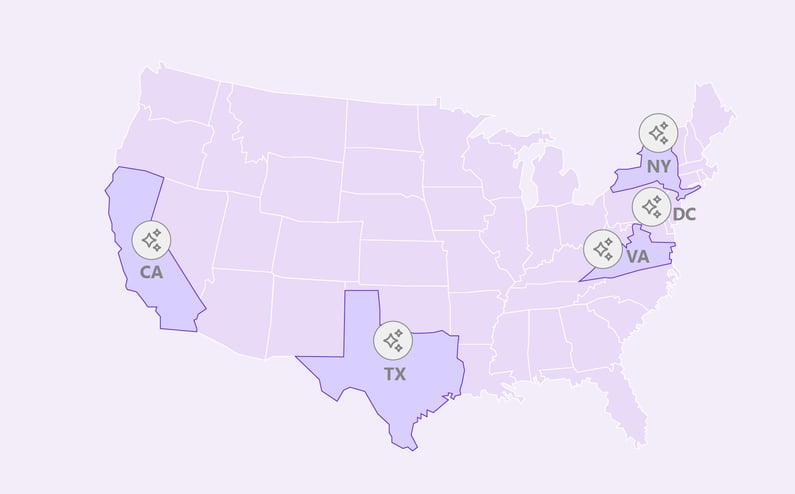
The distribution of AI job demand across the United States was linked to factors such as location, infrastructure, and institutional support. The analysis pointed to states such as California, Texas, and New York as continuing leaders in overall AI job volume, while other regions gained momentum through such factors as federal presence, research funding, and public sector modernization.
States like Washington and Virginia are among those benefiting from close ties between government and private industry, defense and research funding, and a growing focus on analytics and digital modernization. The District of Columbia and surrounding areas are also seeing elevated AI demand tied to policy, regulation, and public sector transformation. These patterns reinforce that AI job growth is no longer confined to traditional commercial technology hubs.
At the same time, AI-driven employment growth is extending beyond professional and digital roles into the physical industries that support AI infrastructure. The rapid expansion of AI datacenters across the United States is generating demand for construction, electrical, HVAC, energy, and other skilled trade work required to build and maintain these facilities. Importantly, many of these datacenters are being developed in geographies different from where AI office-based jobs are concentrated, meaning the economic and workforce impacts of AI may be felt unevenly across regions.
Companies seeking AI talent are gravitating toward locations that offer a consistent pipeline of skilled workers, access to research institutions, and supportive policy environments. As a result, AI is sharpening businesses’ geographical focus, with opportunities increasingly clustered around where education, infrastructure, and institutional alignment already exist.
Despite the growth in AI job demand, public perception remains mixed. In many organizations and communities, workers remain uncertain about how AI will affect their job stability or local economies, even as employers seek AI-enabled talent. This gap underscores the importance of clear communication and accessible workforce development pathways.

How Businesses and Individuals Can Prepare for the Shift to AI-Powered Work
For workers, the message is increasingly clear. AI literacy is becoming a career resilience skill. Understanding how AI tools fit into daily workflows, how to validate outputs, and how to apply human judgment in AI-supported environments can expand opportunities across roles.
For employers, the demand for AI expertise highlights the importance of upskilling current employees. Many of the most effective AI roles should be filled by people who already understand the organization and can adapt to new tools.
AI job demand in 2026 and beyond reflects structural change as an ongoing concern, rather than a short-term disruption. As AI becomes embedded in everyday operations, demand will continue to favor workers that can adapt – and regions that prioritize support for AI-enabled industries, like insurance.
The future of work with AI will be shaped by how organizations redesign work, how people build new skills, and how communities support participation in the ongoing AI-driven economic transformation.