

2026 will be a defining year for insurance tech transformation – you can see our predictions here. Your business – and more importantly, your competitors’ businesses – will rise (or fall...) on how effectively they apply best practices and lessons learned from 2025 AI pilots, POCs, and early use case deployments.
To help steer your organization toward stronger performance, smarter operations, and sustainable growth, we offer eight resolutions to help guide you for a strong start to 2026 and a successful year ahead.

RESOLUTION #1: Add AI Across Your Existing Systems
2025 confirmed that tech stacks dependent on legacy systems are holding insurers back. In 2026, carriers should prioritize investment in modernizing their digital backbone through cloud platforms, API connectivity, workflow orchestration, and agentic navigation layers. While not a small investment, this modernization creates a durable foundation for enterprise AI and positions insurers to adopt future technologies with far greater speed and stability. A modern foundation lets AI scale reliably across all core operations.

RESOLUTION #2: Strengthen Your Data Foundation
Insurers often receive inconsistent or incomplete data from brokers, customers, and third parties. In 2026, carriers should strengthen internal data hygiene by improving how information is validated, standardized, and transformed once it arrives. These improvements will increase AI accuracy, reduce manual data rework, and create smoother experiences across the value chain.
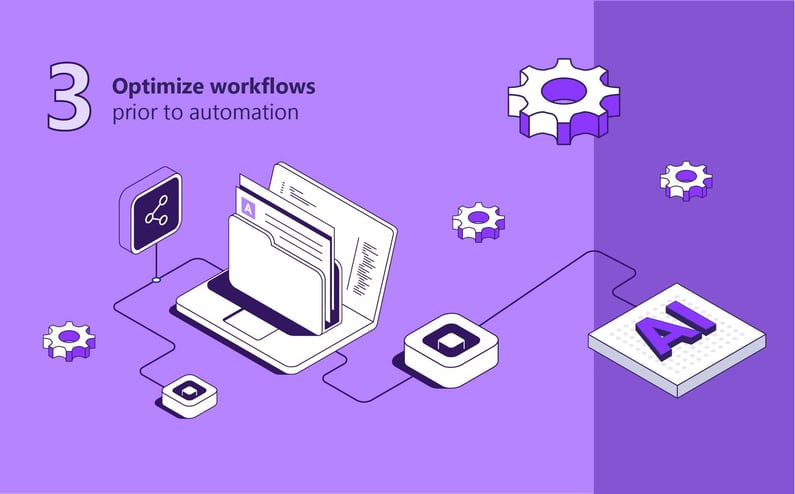
RESOLUTION #3: Optimize Workflows Prior to Automation
A major lesson from 2025 is that automation amplifies whatever process it touches. Insurers that succeed in scaling AI in 2026 should look closely – even granularly – at simplifying operational workflows to look for opportunities to clarify business rules, eliminate manual detours, and reduce unnecessary handoffs. Even as your AI plans are still emerging, having cleaner processes will ensure AI enhances efficiency instead of just hiding dysfunction.
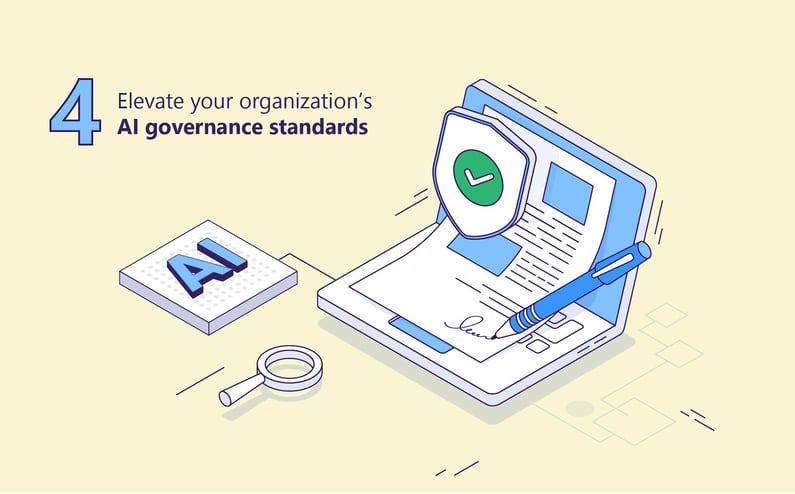
RESOLUTION #4: Elevate Your Organization’s AI Governance Standards
Periodic reviews of AI governance won’t cut it in 2026. Make this the year when you strengthen your AI strategy by prioritizing robust AI programs that integrate explainability, documentation, audit trails, model monitoring, and human-in-the-loop oversight directly into workflows. This expanded approach not only supports alignment with NAIC guidance and emerging state requirements – e.g., insurance commissioners’ offices pilot testing of standards and tools, or pending state legislation mandating human review and validation of denied claims – but also reflects consumers’ rising expectations for fairness, transparency, and decisions that are consistent and defensible., and decisions that are consistent and defensible.
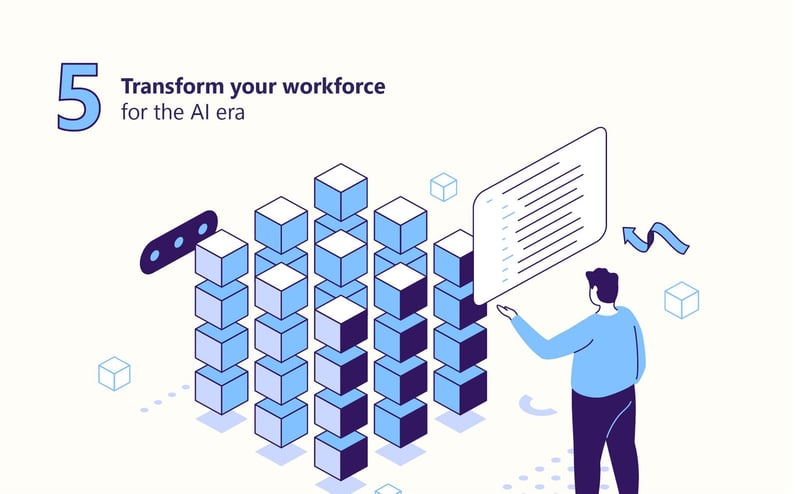
RESOLUTION #5: Transform Your Workforce for the AI Era
AI adoption requires clear short- and long-term staffing strategies that assess future roles, necessary skill sets, and the staffing levels required to support evolving workflows. In 2026, insurers should prioritize upskilling and reassigning talent while building AI-literate underwriters, adjusters, and service professionals who can partner with AI-powered agents to maintain their focus on higher-value work. This includes targeted training, applicable certifications, change management support, new career pathways, and redesigned roles that blend insurance expertise with emerging technical skills.
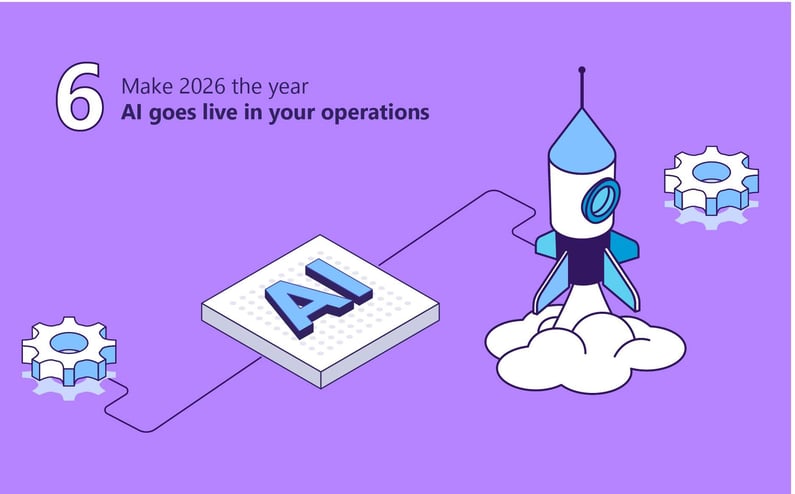
RESOLUTION #6: Make 2026 the Year AI Goes Live in Your Operations
If 2025 was the year of pilots, then 2026 is logically the year of enterprise deployment. Insurers should prioritize scaling FNOL automation, loss runs, endorsements, COIs, claims triage, billing inquiries, and other successful operational AI use cases into governed, measurable production workflows. Including total cost of ownership (TCO) planning at this stage will help ensure that AI programs remain sustainable and cost-effective as they expand. Scaling what works will generate meaningful ROI and build organizational momentum.
RESOLUTION #7: Invest to Drive Retention Through an Elevated Customer Experience
AI is quickly becoming a driver of customer satisfaction and retention. In 2026, insurers should focus on reducing cycle times, simplifying communication, eliminating backlogs, and increasing transparency across all touchpoints. Faster intake and document turnaround with real-time status updates will establish new expectations for customers and distribution partners who’ve become accustomed to user experiences provided by banking, retail, and other sectors. Equally important to this equation is transparency to ensure fairness by avoiding bias in AI-supported decisions to further strengthen trust and loyalty.
RESOLUTION #8: Track Real Impact with Modern Performance Metrics
Traditional productivity metrics don’t capture the nuanced information needed to build and grow AI-enabled business environments. In 2026, insurers should adopt modern measurements – accuracy, cycle-time reduction, compliance confidence, human-in-the-loop review percentages, customer sentiment/NPS, error reduction, straight-through processing rates, among others – to accurately measure AI ROI and TCO. Metrics should be calibrated for the realities of insurance in the AI age to provide a clearer picture of performance, enabling insurers to communicate the technology’s value to leadership, regulators, and stakeholders.
As you step into 2026, the opportunity ahead is not simply expanding AI adoption but applying it with intention. Insurance businesses that modernize thoughtfully, govern responsibly, and align technology with real operational needs will stand out in an increasingly crowded and competitive market.
Today, AI is no longer an experiment – it’s becoming the standard for how insurance work gets done. With disciplined execution and clear priorities, your organization can turn recent learnings into momentum, transforming operations to be more proactive, efficient, and customer centric.